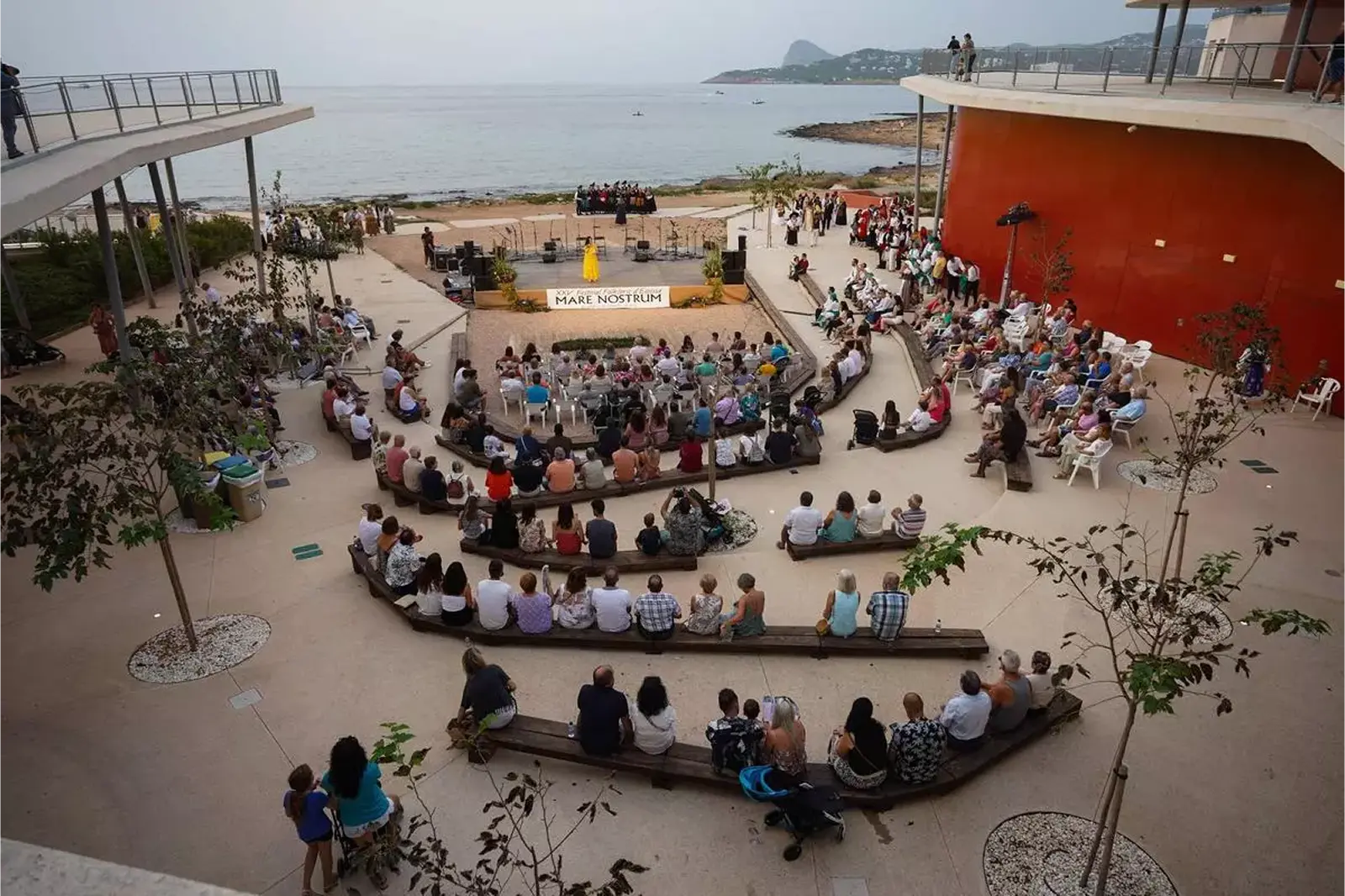
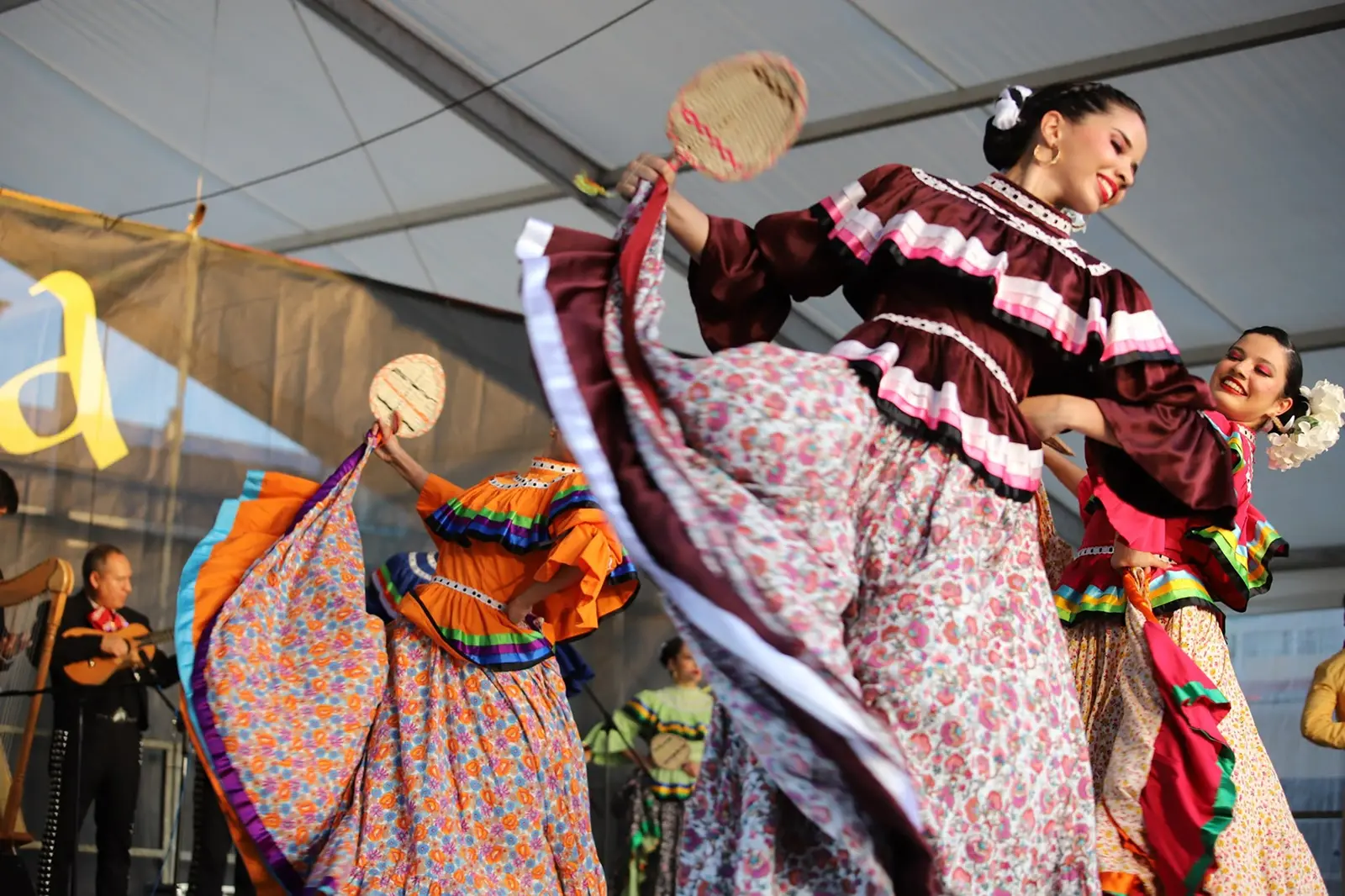
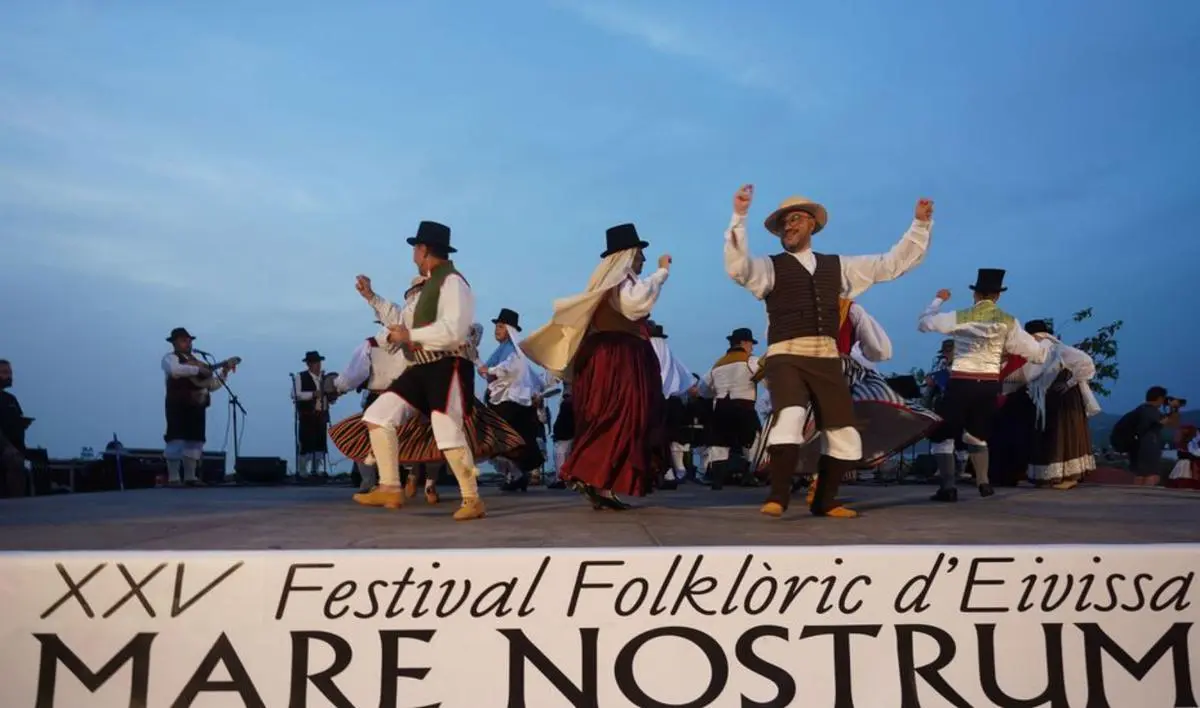
The Mare Nostrum Ibiza Folklore Festival brings together folklore groups from different territories to share music, dance, traditional clothing, and folk traditions.
Additionally, the festival creates a space for meeting and exchange between the island’s folk groups and guest cultures. In this way, the public can discover different ways of living and expressing folk culture.
At the same time, this gathering allows for the sharing of Ibiza’s cultural heritage and the establishment of links with groups from other places.

Ibiza’s traditional country dance groups share the stage with guest ensembles, showcasing an essential part of the island’s folk culture and traditions.
With the participation of the four guest groups from outside the island of Ibiza and the Associació Cultural Es Broll from Ibiza.
Performance by the Grup Folkloric Sant Jordi de Ses Salines with the folklore group Koninklijke Volkskunstgroep Reuzegom (Belgium).
Performance by the group Associació Cultural Sa Colla de Labritja with the Grupo Folklórico Mistura de San Ciprián (Lugo).
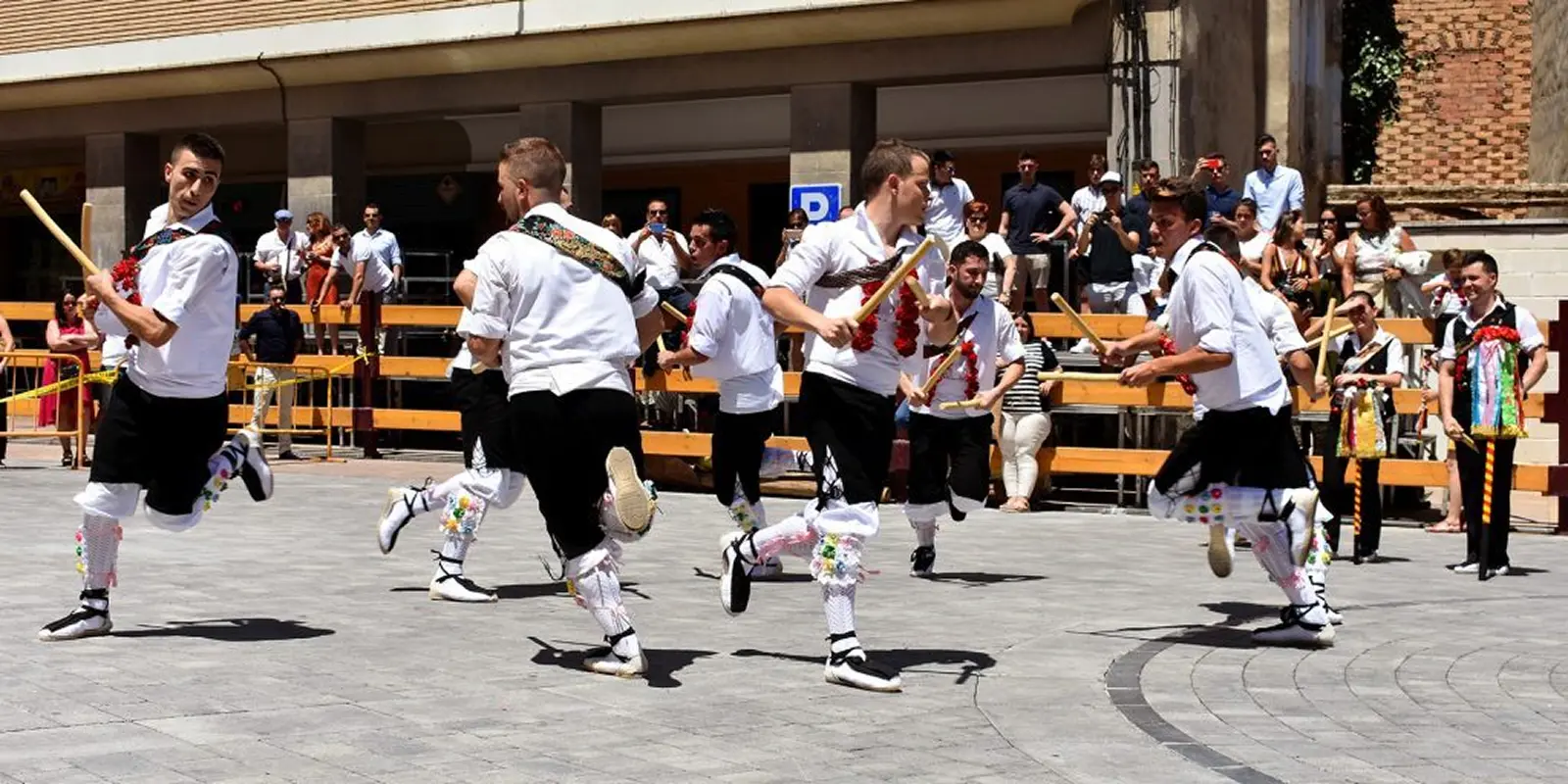
Performance by the group Sa Colla de l’Horta de Jesús with the folklore group Danzantes y Dulzaineros de Gallur (Zaragoza).
Performance by the group Colla d’Aubarca with the folklore group Elai Alai Dantza Taldea de Lakuntza (Navarre).


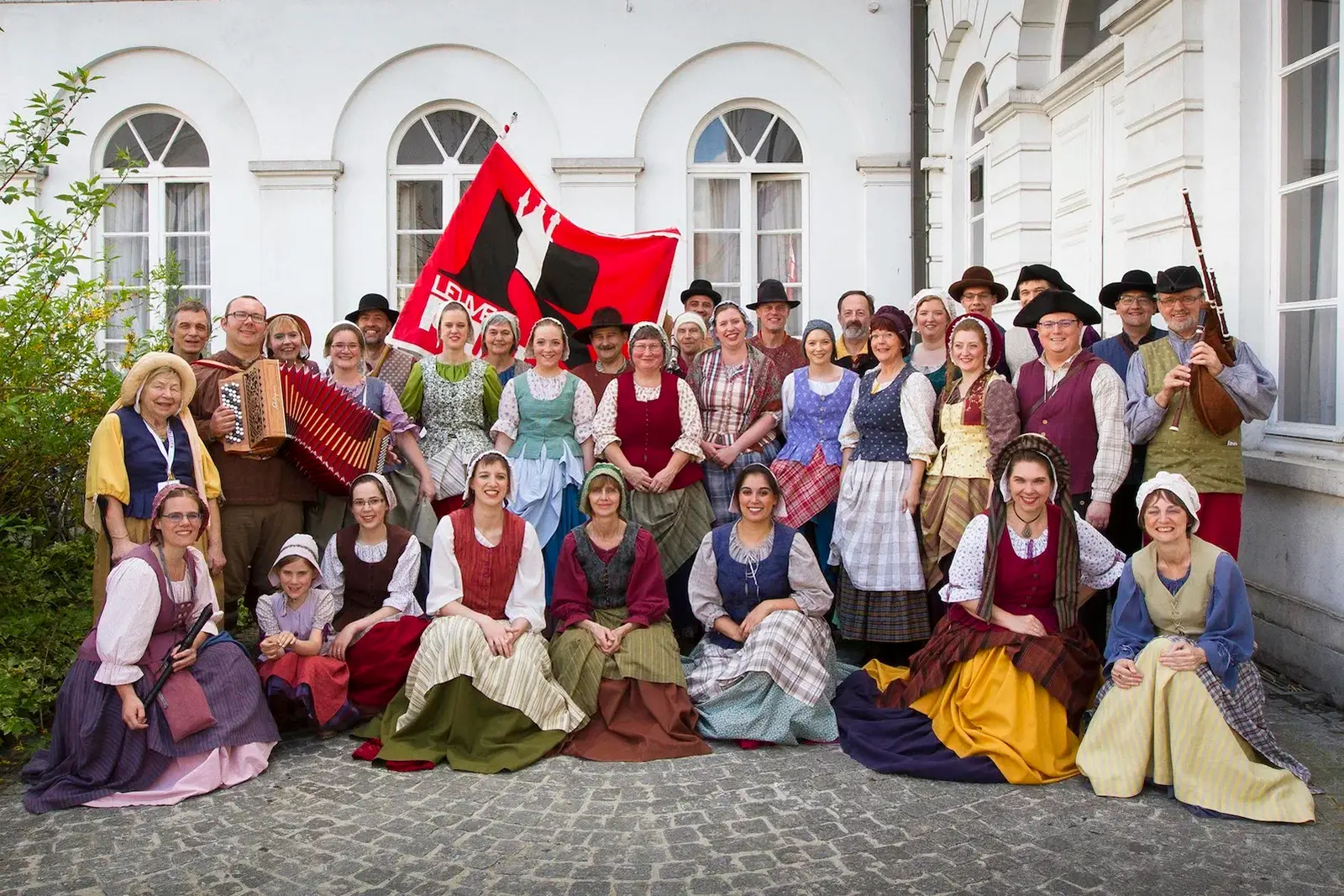
Hailing from Leuven (Belgium), the Koninklijke Volkskunstgroep Reuzegom has been keeping Flemish folk traditions alive since 1945. The group combines dance, live music, and flag-waving displays, featuring traditional costumes and choreographies that share Flemish culture at festivals throughout Europe.
Throughout its history, Reuzegom has worked to preserve and pass down this cultural heritage from generation to generation, maintaining its roots while bringing vitality and dynamism to every performance. Their participation is a testament to the richness of Flemish folklore and its ability to continue bringing people and cultures together through music and dance.
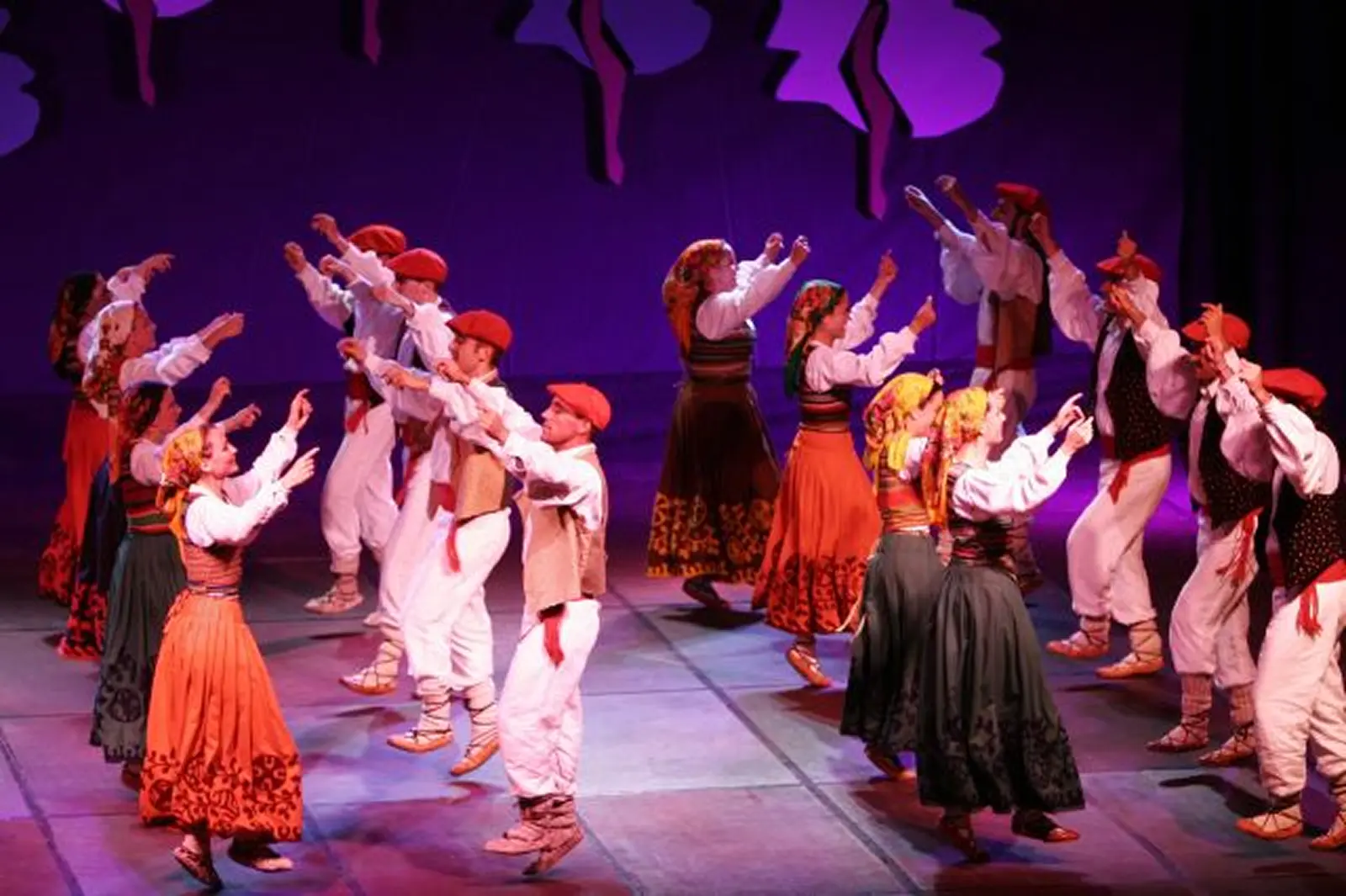
From Lakuntza (Navarra), Elai Alai Dantza Taldea represents the richness and diversity of Navarrese folklore through traditional dance and music. Their performances revive traditional dances and popular expressions rooted in the territory, highlighting a culture that is part of their community’s identity.
With movement, music, and traditional attire as central elements, the group contributes to keeping this legacy alive and transmitting it to new generations. Their participation offers the public a glimpse of Navarra’s cultural heritage and the shared tradition of the peoples of Euskal Herria.
From Lieiro – San Cibrao (Lugo), the Folkloric Group Mistura has been working since 1982 to promote the traditional music and folklore of Galicia. Its repertoire combines folk-rooted pieces with more contemporary compositions, always featuring the bagpipes and traditional percussion as some of its most characteristic elements.
Throughout its history, Mistura has brought Galician culture to festivals and events in numerous European countries and other continents. A proposal that unites tradition and evolution to keep alive a musical heritage deeply linked to Galician identity and culture.
Hailing from Gallur (Zaragoza), the Grupo de Danzantes y Dulzaineros keeps alive one of the most representative expressions of Aragonese folklore: the traditional Dance de Gallur, a tradition documented since at least the 19th century and characterized by the strength and speed of its dances.
Dancers, mayoral, and zagal share the stage with the sound of dulzainas and drums in a repertoire that includes parades, paloteados (stick dances), and traditional dances. Passed down from generation to generation, the Dance de Gallur is one of the town’s primary hallmarks and is recognized as a Festival of Tourist Interest of Aragon.